“Blessed are the meek: for they shall inherit the earth.” Matt. 5:5
As was often so with Jesus, He used this word “meek” in a brief crisp sentence, and not till some time later did He go on to explain it.
In the same book of Matthew He tells us more about it and applies it to our lives.
“Come unto me, all ye that labour and are heavy laden, and I will give you rest. Take my yoke upon you, and learn of me; for I am meek and lowly in heart: and ye shall find rest unto your souls. For my yoke is easy, and my burden is light.”
Here we have two things standing in contrast to each other, a burden and a rest.
The burden is not a local one, peculiar to those first hearers, but one which is borne by the whole human race.
It consists not of political oppression or poverty or hard work.
It is far deeper than that. It is felt by the rich as well as the poor for it is something from which wealth and idleness can never deliver us.
The burden borne by mankind is a heavy and a crushing thing. The word Jesus used means a load carried or toil borne to the point of exhaustion.
Rest is simply release from that burden. It is not something we do, it is what comes to us when we cease to do.
His own meekness, that is the rest. Let us examine our burden. It is altogether an interior one.
It attacks the heart and the mind and reaches the body only from within. First, there is the burden of pride. The labor of self-love is a heavy one indeed.
Think for yourself whether much of your sorrow has not arisen from someone speaking slightingly of you.
As long as you set yourself up as a little god to which you must be loyal there will be those who will delight to offer affront to your idol.
How then can you hope to have inward peace? The heart’s fierce effort to protect itself from every slight, to shield its touchy honor from the bad opinion of friend and enemy, will never let the mind have rest.
Continue this fight through the years and the burden will become intolerable.
Yet, the sons of earth are carrying this burden continually, challenging every word spoken against them, cringing under every criticism, smarting under each fancied slight, tossing sleepless if another is preferred before them.
Such a burden as this is not necessary to bear. Jesus calls us to His rest, and meekness is His method. The meek man cares not at all who is greater than he, for he has long ago decided that the esteem of the world is not worth the effort.
He develops toward himself a kindly sense of humor and learns to say, “Oh, so you have been overlooked? They have placed someone else before you? They have whispered that you are pretty small stuff after all? And now you feel hurt because the world is saying about you the very things you have been saying about yourself? Only yesterday you were telling God that you were nothing, a mere worm of the dust. Where is your consistency? Come on, humble yourself, and cease to care what men think.”

The meek man is not a human mouse afflicted with a sense of his own moral life as bold inferiority.
Rather, he may be as a lion and as strong as Samson; but he has stopped being fooled about himself. He has accepted God’s estimate of his own life.
He knows he is as weak and helpless as God has declared him to be, but paradoxically, he knows at the same time that he is in the sight of God of more importance than angels. In himself, nothing; in God, everything. That is his motto.
He knows well that the world will never see him as God sees him and he has stopped caring.
He rests perfectly content to allow God to place His own values. He will be patient to wait for the day when everything will get its own price tag and real worth will come into its own.
Then the righteous shall shine forth in the Kingdom of their Father.
He is willing to wait for that day. In the meantime he will have attained a place of soul rest. As he walks on in meekness he will be happy to let God defend him. The old struggle to defend himself is over.
He has found the peace which meekness brings. Then also he will get deliverance from the burden of pretense.
Sin has played many evil tricks upon us, and one has been the infusing into us a false sense of shame. There is hardly a man or woman who dares to be just what he or she is without doctoring up the impression.
The man of culture is haunted by the fear that he will some day come upon a man more cultured than himself. The learned man fears to meet a man more learned than he.
The rich man sweats under the fear that his clothes or his car or his house will sometime be made to look cheap by comparison with those of another rich man.
These burdens are real, and little by little they kill the victims of this evil and unnatural way of life.
And the psychology created by years of this kind of thing makes true meekness seem as unreal as a dream, as aloof as a star.
To all the victims of the gnawing disease Jesus says, “Ye must become as little children.” For little children do not compare; they receive direct enjoyment from what they have without relating it to something else or someone else.
Only as they get older and sin begins to stir within their hearts do jealousy and envy appear. At that early age, the galling burden comes down upon their tender souls, and it never leaves them till Jesus sets them free.
Another source of burden is artificiality. I am sure that most people live in secret fear that some day they will be careless and by chance an enemy or friend will be allowed to peep into their poor empty souls. So they are never relaxed.
This unnatural condition is part of our sad heritage of sin, but in our day it is aggravated by our whole way of life.
Advertising is largely based upon this habit of pretense. Books are sold, clothes and cosmetics are peddled, by playing continually upon this desire to appear what we are not.
Artificiality is one curse that will drop away the moment we kneel at Jesus’ feet and surrender ourselves to His meekness.
Then, we will not care what people think of us so long as God is pleased.
Then what we are will be everything; what we appear will take its place far down the scale of interest for us.
Apart from sin, The heart of the world is breaking under this load of pride and pretense. There is no release from our burden apart from the meekness of Christ.
Good, keen reasoning may help slightly, but so strong is this vice that if we push it down one place it will come up somewhere else.
To men and women everywhere Jesus says, “Come unto me, and I will give you rest.”
The rest He offers is the rest of meekness, the blessed relief which comes when we accept ourselves for what we are and cease to pretend.
It will take some courage at first, but the needed grace will come as we learn that we are sharing this new and easy yoke with the strong Son of God Himself.
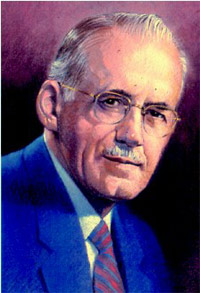
Aw Tozer: The Pursuit of God
 KOINONIA ART