1 Corinthians 3:12
If anyone builds on this foundation using gold, silver, costly stones, wood, hay or straw,
1 Corinthians 3:13 Their work will be shown for what it is, because the Day will bring it to light. It will be revealed with fire, and the fire will test the quality of each person’s work.
It is weight that counts. Wood, hay, stubble are cheap, light, temporary; gold silver, precious stones are costly, weighty, eternal.
Here is the key to value.
The heavy metals, the gold of the divine character and glory, the silver of His redemptive work: these are the materials He prizes.
Not merely what we preach, please note, but what we are, weighs with God; not doctrine, but the character of Christ wrought out in us by God’s orderings, by God’s testings, by the Spirit’s patient workings.
Work that is of God is work that has been to the Cross. When our work has been that way, we can rest assured that it will in the end survive the fire.
Not, “Where is the need most evident? What ideas and resources have I got? How much can I do? How soon can I put that doctrine into practice?” but, “Where is God moving? What is there of Him here? How far does He will for me to go? What is the mind of the Spirit on this?”—these are the questions of the truly crucified servant. He recognizes God’s “Go” and His “Speak,” but also His “Wait,” and His “Go,” but say only so much. Aware of his own weakness and emptiness, the greatest lesson he has to learn is to commit his way to God and wait to see Him move.
The problem lies in our failure to understand that, in God’s work, man in himself is of no use. Wood, hay, stubble, these suggest what is essentially of man and of the flesh.
They imply what is common, ordinary, easily and cheaply acquired—and of course perishable. Grass today may clothe the earth with beauty, but where is it tomorrow?
Human intellect may give us a grasp of Scripture; natural eloquence may have the power to attract; emotion may carry us along; feelings may seem to supply a guiding sense—but to what? God looks for more solid values than these.
Many of us can preach well and accurately enough, but we are wrong. We talk of the flesh but don’t know its perils; we talk of the Spirit, but would we recognize Him were He really to move us?
Too much of our work for God depends not on His will and purpose, but on our feelings—or even, God forgive us! on the weather. Like chaff and stubble, it is carried away by the wind. Given the right mood we may accomplish a lot, but just as easily, in adverse conditions, we may give up entirely. No, as the fire will one day prove, work that is dependent on feelings or on the wind of revival is of little use to God. When God commands, feelings or no feelings, we must learn to do.
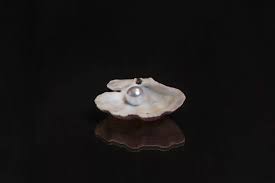
The God-prized values are costly. Those unwilling to pay the price will never come by them. Grace is free, but this isn’t. Only a high price buys costly stones.
Many a time we shall want to cry out “This is costing too much!” Yet the things wrought by God through the lessons we learn under His hand, though we be long in learning them—these are the really worthwhile things.
Time is an element in this. In the light of God, some things perish of themselves; there is no need to wait for the fire. It is in what remains, in what has stood God’s test of time, that true worth lies. Here are found the precious stones, formed in what
God graciously gives us of sorrow and trouble, as He puts us “through fire and water” to bring us to His wealthy place. Man sees the outward appearance; God sees the inward cost. Do not wonder that you experience all sorts of trials. Accepted from His hand they are the sure way to a life that is precious to Him.
May God have mercy on the clever people who pass on merely what they have read or received from another. Not even speaking for God can be done without cost.
It is all a question of whether the person’s life is light or weighty, for weight shows the quality of the material. Two men may use the same words, but in the one you meet something you cannot get past; in the other— nothing.
The difference is in the man. You always know when you are in the presence of spiritual worth. No amount of theorizing about the Lord’s return, for example, will take the place of a life that has been daily lived looking for Him.
There is no escaping this difference, and no substitute for the real thing. Alas, some of us are so unlike our words that it might be better if we said less about spiritual things.
Do not wonder, then, at God’s concern for the materials of His house. Imitation jewelry may have a certain beauty, but what woman who has once possessed the real thing would give it another thought?
The apostle Paul leaves us in no doubt of his own valuation. Ten coolie-loads of stubble can never approach the price of one single gemstone.
All flesh, all mere feelings, all that is essentially of man, is grass and must vanish away. What is of Christ, the gold, the silver, the costly stones, these alone are eternal, incorruptible, imperishable.
It is this lasting character of God’s Church that must now claim our attention.
Watchman Nee













 KOINONIA ART